
The North Facing Garden Design Guide
In my 20s, house hunting was consumed with a long list of ‘needs’ followed by an even longer list of ‘wants’ with an overarching list of ‘absolutely no ways’. I knew I wanted a house that needed some tlc, with a lot of potential and, most importantly, a garden to make my own. The location was another element of my ‘needs’ and wasn’t something I was willing to compromise.
I was reasonable, to some degree, with my ‘wants’ and firmly at the top of my list was a South Facing garden. Did I really know exactly what that entailed at the time? Not really. In all honesty, it was just something that people yabber on about so I assumed it was something that definitely should be high on the garden requirement list.
Many years later, I realise it’s mostly one of those bog standard requirements like a ‘kitchen/diner’ that aren’t always as straight forward, nor desirable as people might think.
Shrinking your requirements down to just a South Facing actually can mean you miss out on some of the most interesting gardens you can create – in my personal opinion. When your desires don’t base solely around the sun, you have to get more creative with your garden which can create such an interesting experience and aesthetic.
The North Facing Reality
When people talk about having a ‘north/east/south/west facing garden’, it may seem just like any other pointless label , however it does actually make a big difference to your garden experience.
The sun dictates the plants that can thrive in your garden more than just about anything else. Your soil type is another huge contender in this, but that’s got to be its own blog post so let’s stick with the sun for now.
To find out whether you have a north facing garden, you can stand with your back to your house, facing out towards your garden, get a compass/a compass app and see which direction the compass is looking towards. Job one is done!
Depending on the specifics of your garden such as the height of your house, the structures or trees that surround your garden, whether you are slightly angled North East or North West etc. there will always be slight differences, so lets drill down a little further into what else is beneficial to know about your garden before you start deciding on the exciting bit (the plants, of course!).
If a garden or border has more than 6 hours of sun in midsummer, it’s classed as ‘full sun’, if it’s between 3-6 hours then it’s part shade and if it’s less than 2 hours it’s classed as full shade. Your garden may well have a mixture of these in different areas of the space. If you observe the space on a nice sunny summers day, you’ll get a good idea of where your opportunities are to mix things up a bit with your plants, your seating areas etc.
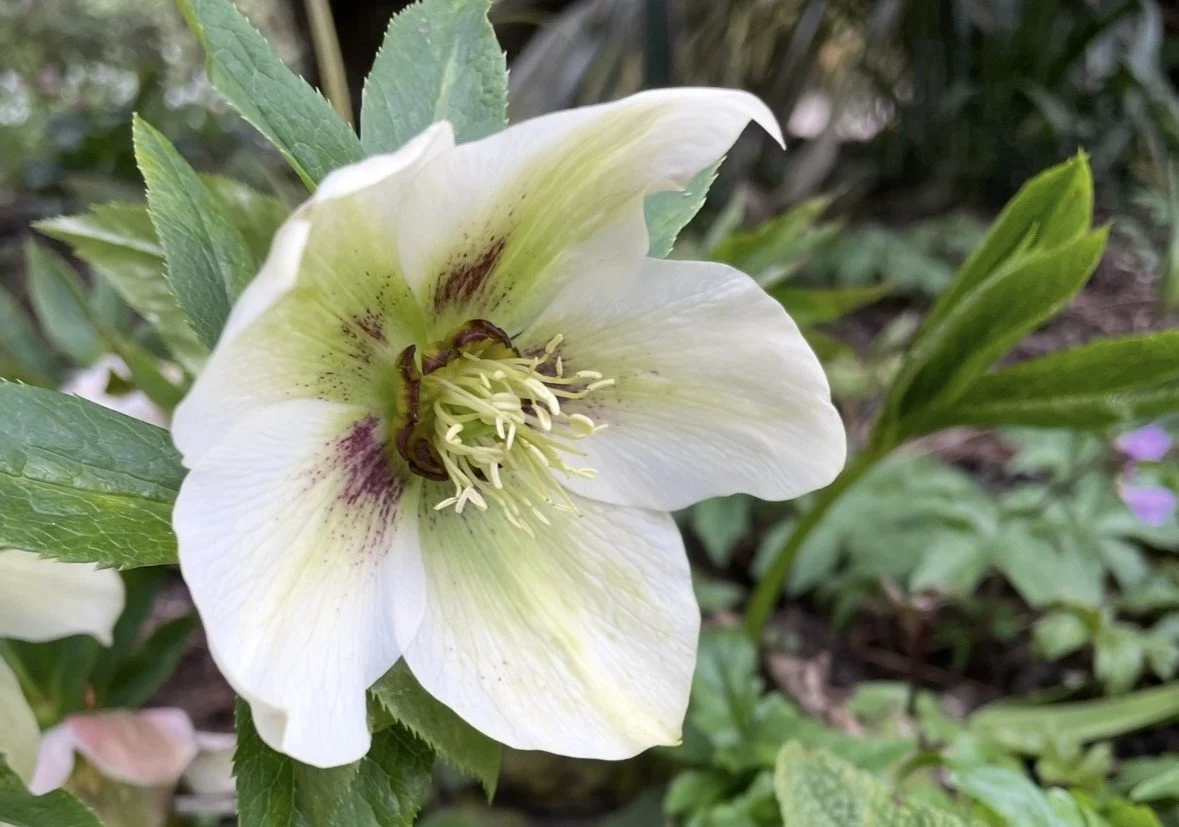
Hellebore pictured
The Design Opportunities
It's easy, when designing your own garden, to look at other example layouts and just select one but doing that can mean you miss out on maximising your own gardens unique features. We need to think carefully when deciding on the fixed areas of your garden, such as your paved/decked/gravelled areas for seating/dining/socialising.
As we’ve determined you have a North facing garden, you’re probably going to be on the shadier side nearest your house for the most part of the day. Your garden space will be sunnier the further away from your house you get. So to maximise on that sunshine, you want to put the areas that will benefit from that in those areas. Putting your main socialising/dining area further down your garden in those sunnier spots could therefore, be a good design feature.
Despite it being shadier, you definitely don’t want to forgo a potential seating area nearer the house. Having to traipse the length of your garden to simply take a seat might not feel like a big deal, but you will find yourself less likely to do so. The key with your garden design is for you to make the most of your garden, whatever the weather may be, so having different seating opportunities in varying aspects, is one of the biggest choices you can make.
With the lower light conditions of your North Facing garden in mind, choosing your hard landscaping elements also need to be considered. When choosing materials for your garden hardscaping, it can be a good idea to select lighter colours for paving and paler colours for painted areas such as walls or fences. This helps bounce the light around and lift the shadier areas visually making the space feel much brighter.
Lush green lawns can struggle a little in low light areas, especially depending on the type of soil you have and whether they get a lot of footfall. Being strategic with the placement of your grass is a good idea to make sure you don’t end up with boggy, bare soil patches. Depending how drawn to lawns you are, you may even want to throw away that idea altogether and design your garden lawn-less. As, despite what you might have been lead to believe, grass isn’t actually a ‘requirement’ of any garden!
The Exciting Bit
Now onto the plants. Do not listen to anyone if they say having a north facing garden means you won’t be able to grow much or have much colour in your garden. They are lying.
Shadier gardens give you such an amazing opportunity to grow some of the most interesting and beautiful plants ever to exist. (I love them - if you can’t tell by this point!)
You can lean into a particular vibe for your garden, depending on your own taste, by going with real woodland plants such as ferns or you could go for a more tropical aesthetic with a structural, unusual planting scheme. You could select your plants simply by choosing a colour scheme and going down that path; choosing white flowers and/or silver foliage to brighten your space even in the darkest of areas.
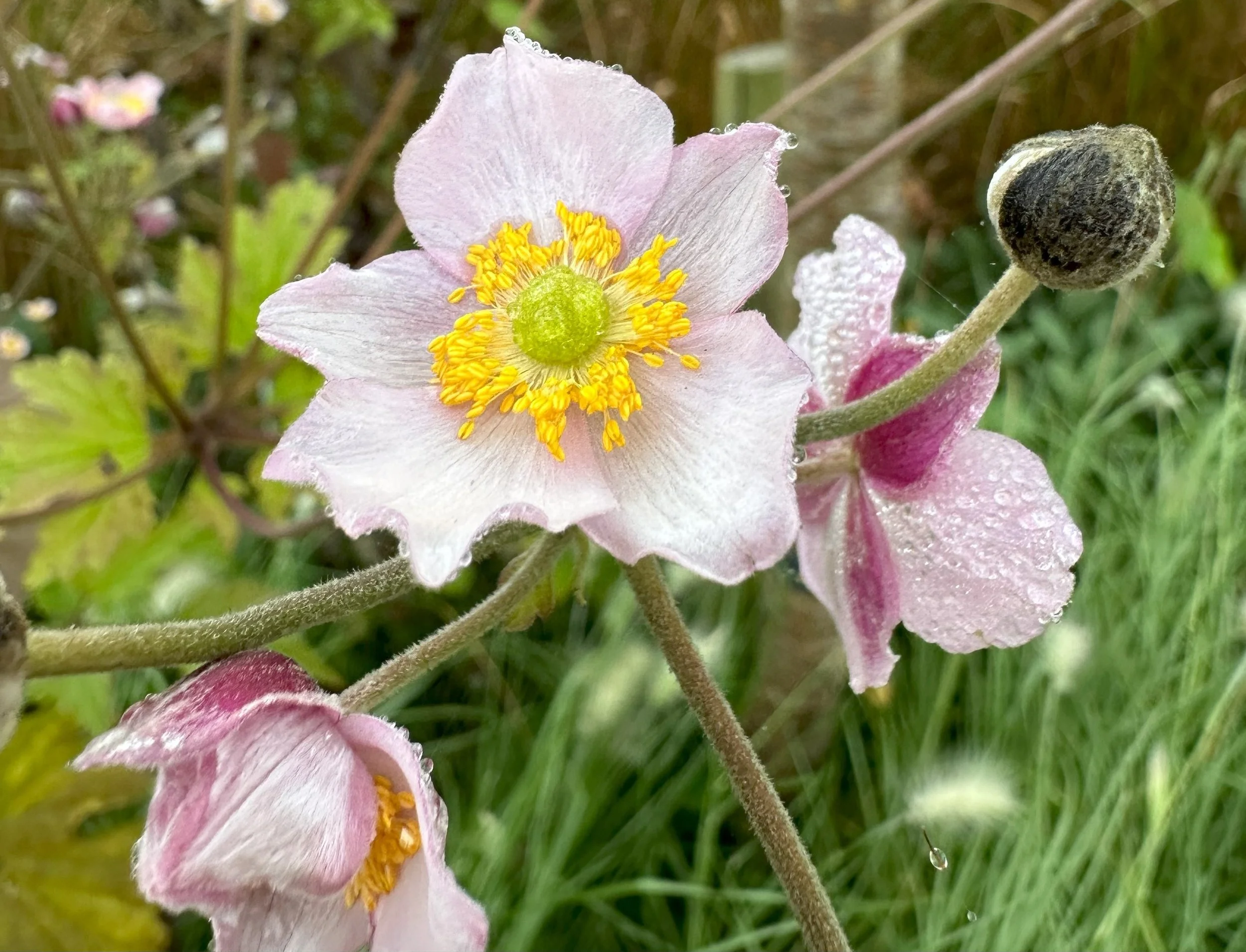
Japanese Anemone pictured
Doing some research on what vibe you want to go for is the best place to begin, Pinterest being a really good option for this. The gardens you draw inspiration from don’t have to be specifically North facing garden images, you can just get an idea of what you like aesthetically and then choose plants that work with both your garden conditions and aesthetic preferences.
North facing gardens tend to have a much more stable temperature which means your plants are less likely to scorch, dry out or be damaged by midday heat. The sun that you do get in a North facing garden is more likely to be in the morning and in the evening, missing out on the intense midday heat. Having your morning coffee with the sun on your face and your evening *insert drink of your choice* in the sunshine sounds pretty delightful to me.
To get you started with some ideas for plant options, here are some of my all time favourite plant options for shadier spots:
Brunnera ‘Alexanders Great’
For vibrant foliage, I’d look to Brunnera ‘Alexanders Great’ to bring some silvery beauty. It’s classed in many places as semi-evergreen however I personally don’t think it’s ‘semi’ enough to rely on it for winter interest, but that’s not to say it doesn’t deserve a prime spot. With its silver licked foliage and bright blue dainty flowers during Apr/May, it’s a highlight in any border.
Sarcococca Confusa
For a small evergreen shrub choice, Sarcococca Confusa is a great pick as during the winter months it creates small white flowers which on their own are lovely, but it’s the sweet scent that they produce that is the true glory. I have one in a large planter next to the front door so that when it’s in bloom, during dark wintery days, its scent fills the air and brightens my mood every time I enter or leave my home.
Geranium Phaem Album
If you’re going for quite a woodland theme, I think that Geranium Phaem Album makes a lovely addition with it’s white flowers popping up here and there bringing that brightness to the shady border.
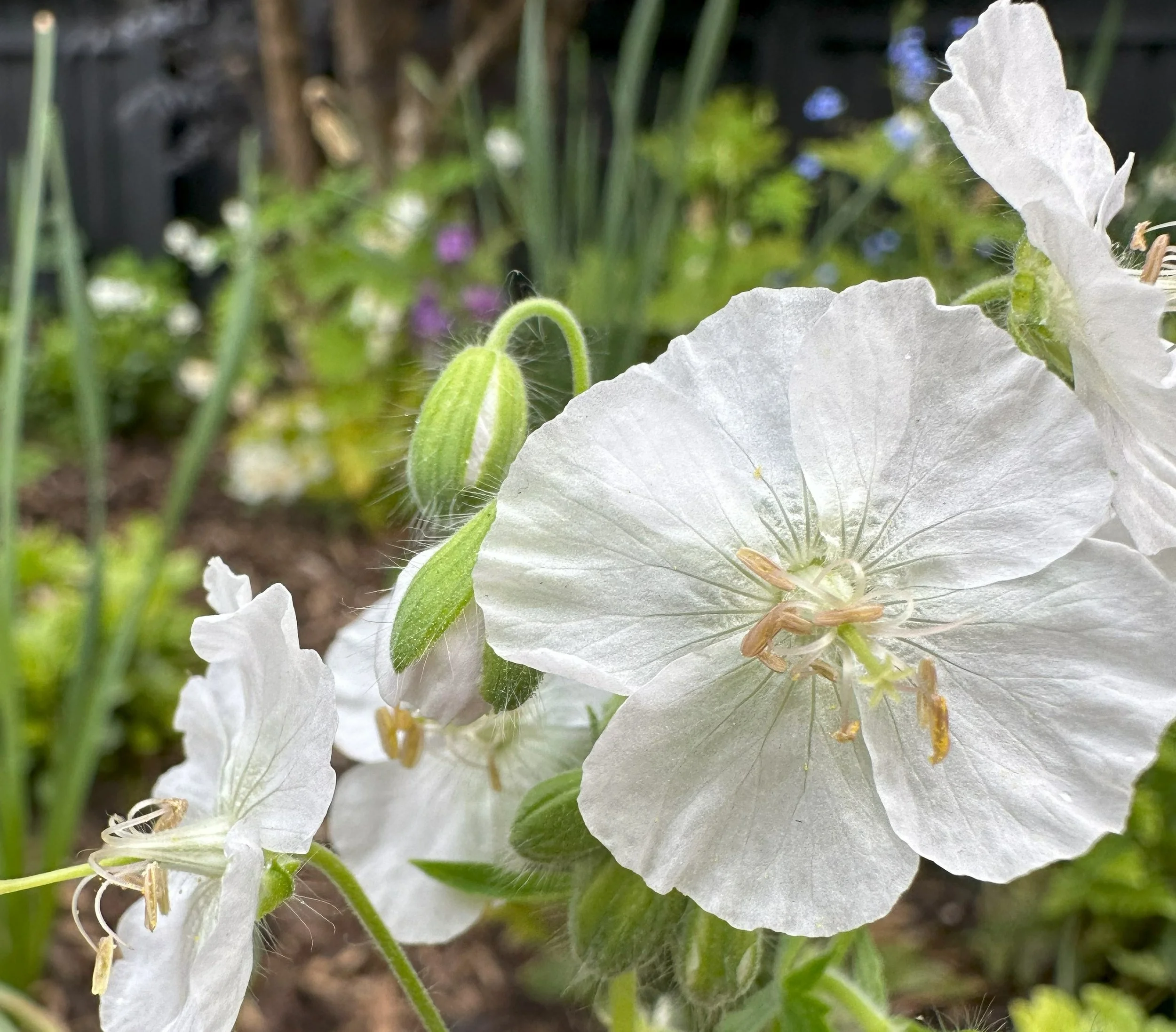
Geranium Phaem Album pictured
Ferns
I find ferns never go unappreciated, with some fantastic evergreen options (too many to list!) to continue the woodland vibes throughout the year. Often evergreen ferns just need a little tidying up in the spring before they put out new foliage so will look good for 10/11 months of the year which is pretty great value for year round interest.
Heuchera ‘Green Spice’
I love the tall slender flower spikes on this Heuchera and the bumblebees do, too. There are many heucheras with amazing foliage colours to add a little something different if you’re looking for contrasting colours to offset your planting scheme.
Honestly, I could go on for hours with my list of gorgeous shade loving plants, but I won’t, for your sake. I’ll leave you with a few more honorable mentions:
· Hydrangea
· Fatsia Japonica
· Japanese Anemone
· Lamium Maculatum
· Hellebores
· Foxgloves
Once you’ve observed your garden and have scoped out those key areas, you’ll be able to create that dream garden. Add in some gorgeous planting and you’re on the way to wanting to spend every minute you can in your own North facing garden haven.